Sunday, March 1, 2015

Thai Steamed Fish with Spicy Chili-Lime Sauce / Pla Neung Manao


Pla (fish) neung (steamed) manao (lime) is one of the most favorite Thai dish I LOVE to eat.  I meant, I can literally eat the whole fish by myself.   Yes, most, if not all, Thai people love this dish if you ask.  It’s not only because it’s so easy to make, but it’s so healthy, and sooooo spicy-licious!  It’s said to be very popular among the drinkers at the party and family gathering. 

Since this dish is full of the intense herbal flavors from the fresh Thai chili, garlic, and ginger,  it is meant to be eaten with steamed jasmine rice to balance out the spiciness and calm the dish down a little.   However, steamed rice is only an optional if you can handle the heat.   This dish can be made with any white fish of your choice either a whole fish or fish fillet.   However, keep in mind when you buy a whole fish to make this dish if it will fit in your steamer, or otherwise cut the whole fish in half or use fish fillet instead.   

I promise you when you make one, you will want to make it again and again. But be warned, use chili with your own caution, as you can handle it. 


What you need:

1.5 lbs. cleaned fresh Golden Pompano, or other white fish of your choice – barramundi, or tilapia, etc. 


For the sauce
3 tbsp. finely chopped garlic
2 tbsp. finely chopped Thai chili
2 tbsp. finely julienned fresh ginger
1/4 cup fresh squeeze lime juice
3 tbsp. fish sauce
1 1/2 tbsp. sugar


For garnish
1/4 cup julienned scallions both white and green parts
A handful of cilantro leaves


1. Whisk together all the sauce ingredients until the sugar is dissolved and set aside.
2. Use a large shallow dish that fit in your steamer because there will be some juice comes out from the fish. It’s all the good flavor, do not discard!   Steam the fish on high heat for 18-20 minutes (depends on the size and weight of the fish).
3. When the fish is cooked, pour over with the chili-lime sauce and garnish with cilantro leaves, and scallion.
4. Serve the dish immediately with steam jasmine rice and enjoy.  


Thursday, February 19, 2015

Thai Duck Noodles Soup


Happy Chinese New Year everyone!   All of the Chinese people and those who has Chinese ancestors, like myself, celebrate this rich traditions in the most meaningful ways….with food!   And each food item is said to bring specific types of good fortune in the coming year.   As rice, tangerines and oranges for Good luck, spring rolls, dumplings, and whole fish for wealth and prosperity, long noodles for longevity, duck for happiness and pork for good health, they are sure on everyone’s wish list.   I think by eating these specific of good tasty food on the New Year with its significant meanings is just a win-win situation. 

Since noodles represent long life and duck represent happiness, I guess eating duck noodle soup on the Chinese New Year would give me a long happiness life, hopefully!    I determine to continue cooking and eating lucky food that symbolize good fortune for a couple of weeks.  Let's see if I can do it.   


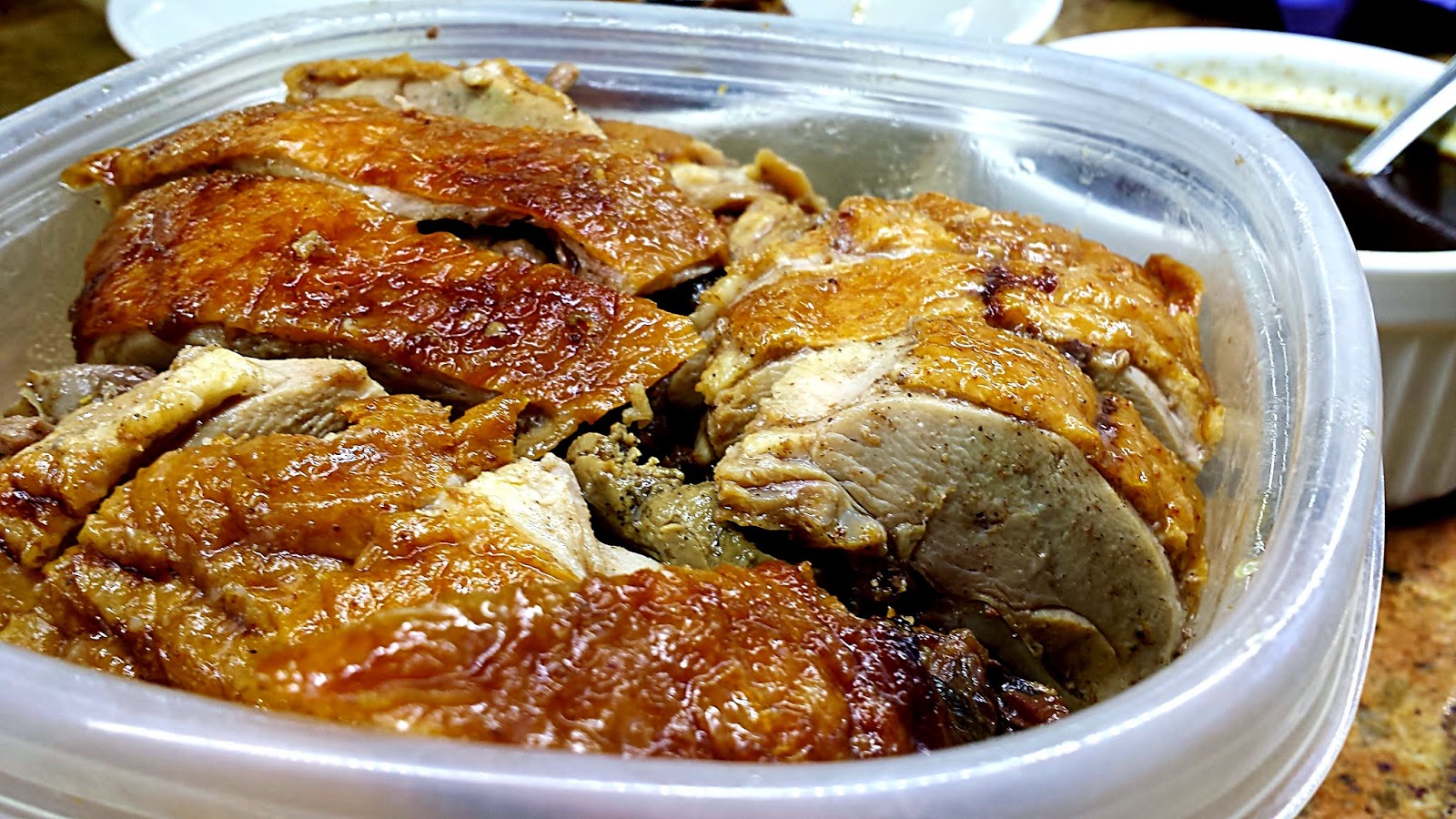
This bowl of duck noodle soup is pretty easy to make since the cooked duck can be purchased at the Chinese restaurant where they are also selling yummy dim sum.  When you buy the soy-braised duck, don’t be afraid to ask for a cup of sauce by telling them that you want to make duck soup.  They are happy and willing to fulfill your request.   Just ask!    Then, all you have to do is to add some more water to dilute that condense thick soy sauce and add some cloves, cinnamon sticks, star anise, fresh ginger, and daikon to improve the broth and seasoning some more with brown sugar for your liking.   Then, serve the soup with rice or egg noodles and veggies of your choices.  For the use of fried garlic, it can be skipped if you don’t have it.  But it will give the bowl tremendously the best flavor ever. 


What you need: *Can be served up to 4 -6 servings depends on the serving size
1 large store-bought soy-braised duck
1 cup seasoned dark soy sauce (that come with the duck)
1 stick cinnamon
2 star anise
2 cloves
8-10 cups water (or more if the sauce is thicker and salty, mine used 8 cups)
2 cups daikon, peeled and quartered (about a half of a medium daikon)
5-6 rounds fresh ginger slices  
Cooked noodles of your choice – rice noodles, egg noodles, or even vermicelli noodles – cook noodles accordingly to the package
Finely chopped green onion
Cilantro leaves
Blanched Spinach or Chinese broccoli
Beansprouts
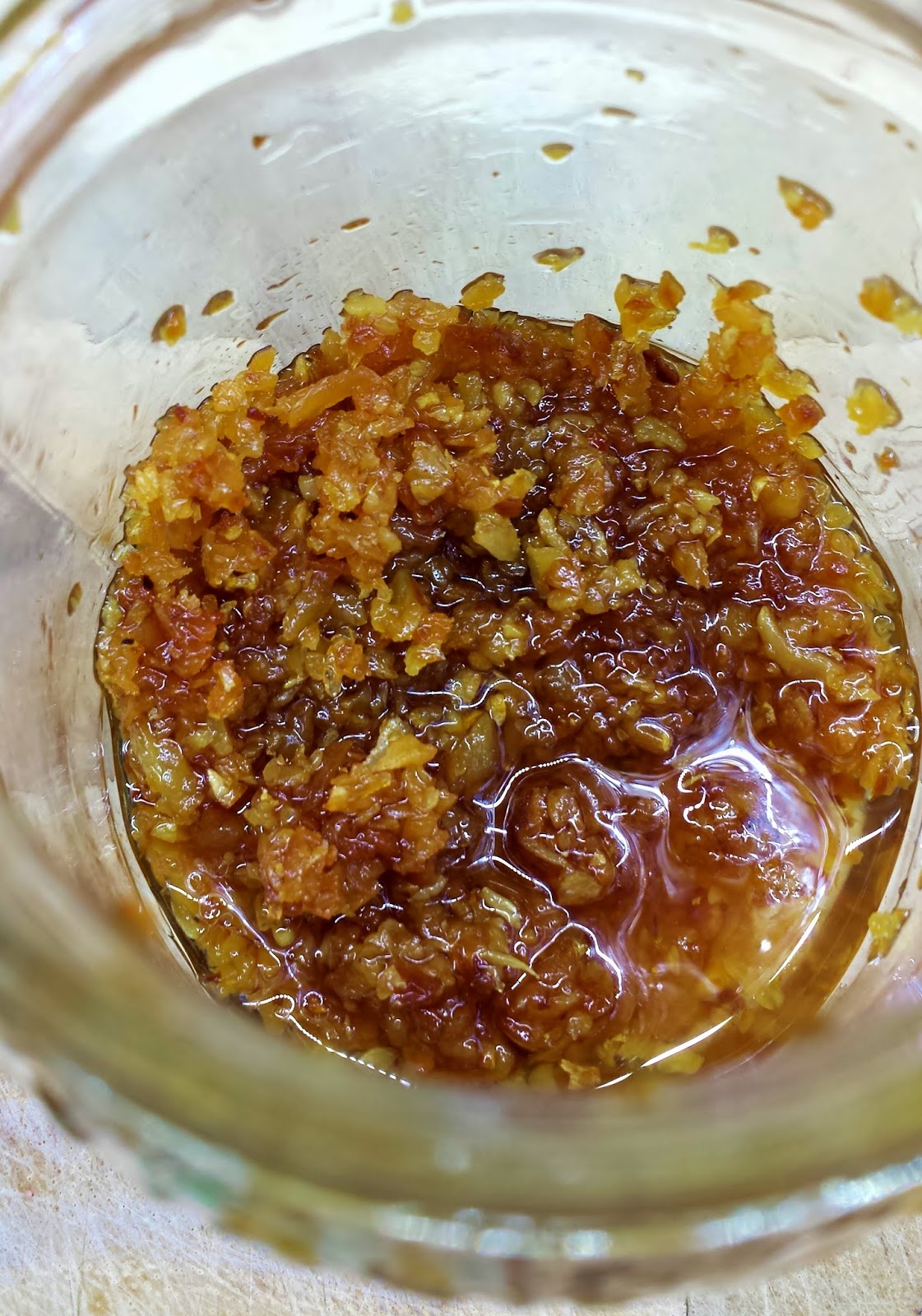
Fried garlic with oil
Ground white pepper
Fresh red chili – optional
Condiments – vinegar, chili sauce, or dried red chili flakes 


1. Making the broth:

             -- Pick out the duck’s head, neck, and legs from other parts of the duck (see pictures)
-- In a large pot, add seasoned dark soy sauce, duck’s head, neck and legs, water, star anise, cloves, cinnamon stick, daikon, and ginger into the on the medium high heat and let it boils for 25 minutes or until the daikon is cooked.  Notes: Add more water if needed since the broth will reduce during the boiling.  
*In addition, seasoning with soy sauce or/and brown sugar if the taste of the broth is too weak as the broth should be a little salty from the soy sauce and a little sweet from brown sugar.  Daikon and ginger as well as spices really help improve the broth.  Mine was just right and didn’t need more seasoning.  Again, the taste of the broth depends on the sauce you got from store when you bought the duck.

2. Resemble the bowl:

                -- Add a handful of cooked noodles of your choice in a serving bowl
                -- Add blanched spinach or Chinese broccoli, or other greens of your choice – kale, broccoli, zucchini, cabbage, etc.
                -- Add a few pieces of duck meat
                -- Add 1/2 teaspoon or more fried garlic + oil
                -- Ladle the broth over as much or as little as you wish
                -- Sprinkle with ground white pepper, green onion, cilantro leaves, and some beansprouts
                -- Serve with condiments as an extra seasoning as your preferred taste  


Thursday, February 12, 2015

Panang Pork Curry with Kabocha Squash


Once in a while I’m just craving for some good Thai curries that really truly hit the spot.  The curry I always make is red curry chicken with bamboo shoots or some mixed veggies and eat with hot steamed rice or rice noodles.  It’s kind of Thai style comfort food I’d grown up eating all my life. It’s just really hit the spot!

There are many different kinds of coconut-based Thai curries – red curry, green curry, yellow curry, as well as masaman curry and panang curry.  The former four curries are soupy curry types, the ladder, the popular panang curry, is creamier than the other curries, and easier to make with few ingredients.   
Panang curry typically can be made with beef, pork, or chicken meat.  However, there is no limit of what kind of meat you would like to use. (Wild boar, rabbit, or bison….go for it!)   Panang curry is made usually only meat without any vegetable add into it.   Since I have kabocha squash in hand and I love eating it so much, I added into my panang this time which made my panang even more creamy and dreamy awesome!   The essential ingredient to this panang that “must include” is the kaffir lime leaves.   And if you notice, there is no oil using in my recipe.   Why?   Because the coconut milk will render and release its oil when frying on the hot pan.   If you ever eating panang at the Thai restaurant and find some fatty greasy oil floating on the top so the curry looks "pretty," you can be sure that panang has some cooking oil added, which i don't like it.  This issue has led to a misconception to some thinking that Thai food is greasy!   


Can Thai basil be used as a substitute?   Yes, you can BUT the distinctive taste and fragrant of kaffir lime leave is the essence of panang curry.    I used to get a question asking… which curry is the spiciest of all?   To be honest, there is none!  Thai curries are not spicy at all.  Some Thais even add some more dried chili flakes to make it even spicier.   It is all only the heat from all the spices in the curry paste that gives the curry a unique taste on its own.  The curries are normally seasoning with fish sauce and palm sugar, and that’s it, more or less depends on which curry you are making.    
Notes to the use of fish sauce:  If you are not comfortable using fish sauce or do not have it, you can use salt.   And sea salt is better than regular table salt.   I would not recommend using soy sauce because the taste wouldn’t be the same.  But if you only have soy sauce in hand, use it and try it.  You will know why I don’t recommend using it.   Believe me.  The taste would not be the same!    
Let’s cook! 


What you need:  for 2-4 servings

400 g. pork tenderloin sliced to bite size
2 tbsp. panang curry paste – I used Maesri which can be found at Asian supermarket
1 can/13.5 fl.oz. Coconut milk – I used Chao Koa
2 cups Kabocha squash (or other squash you have), cut to bite size
2 tbsp. fish sauce
1 tbsp. sugar
4-5 leaves kaffir lime leaves, thinly chiffonaded
2-3 red chili (such as red serrano peppers) seeded and thinly sliced
And steamed white/brown rice to be served with the Panang


1. Reserve 3 tablespoons of coconut milk aside for garnish.
2. Set a medium pan over medium low heat.  When the pan is hot, add 1/4 cup coconut milk into the pan as it will get a little sizzle since the pan is hot.  Stir in panang curry paste until they are well combine and fragrant.  Add a little more coconut milk and stir.  When it gets bubbles, add pork slices, stir, and cook for 2-3 minutes.
3. Add the rest of coconut milk, squash, fish sauce, sugar, half portion of kaffir lime leaves chiffonaded, and stir to combine well.  Let it cook for another 7-10 minutes or until the pork and squash are cooked.

4. Serve with drizzling of the reserved coconut milk over Panang and garnish with kaffir lime leaves chiffonaded and red chili on top.  Serve with steamed white/brown rice.  Enjoy! 


Related Posts Plugin for WordPress, Blogger...